
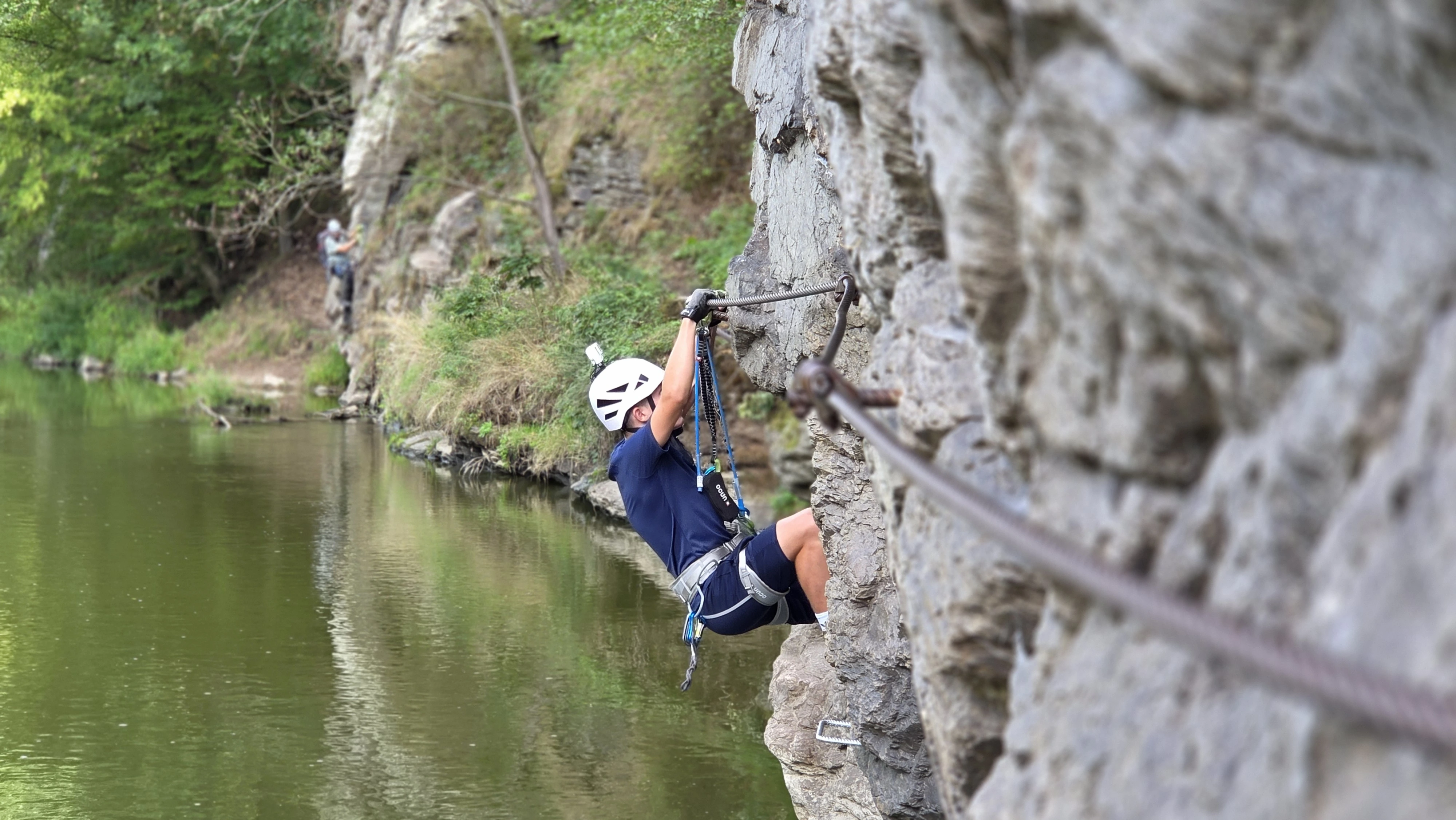
We did not want just another list of via ferratas. We wanted to create a place where people can truly explore, understand and plan their route before taking their first step on the rock.
It all started on the Tábor via ferrata with a simple question. How do you choose a via ferrata when you actually know so little about it before the climb? Information was scattered across different places, loading was slow and you only discovered what the via ferrata was really like once you were standing right below the rock.
That is why we started thinking about how modern technology could be used to let people experience a via ferrata before the actual climb. The first 3D models created using photogrammetry gradually emerged, along with detailed route information and tools that help people better understand what awaits them along the way. At the same time, we did not want to create a complicated system full of unnecessary features. The goal was to bring important information together in one clear and intuitive environment.
And that is how ClimbPath was born. What started as an idea for a better way to discover via ferratas gradually grew into a platform connecting data, technology and experiences from people in the field. We continue to work on ClimbPath today and constantly look for new ways to bring people closer to their next climb. Because we believe that when you know the route well before setting out, you can fully enjoy the adventure itself.
